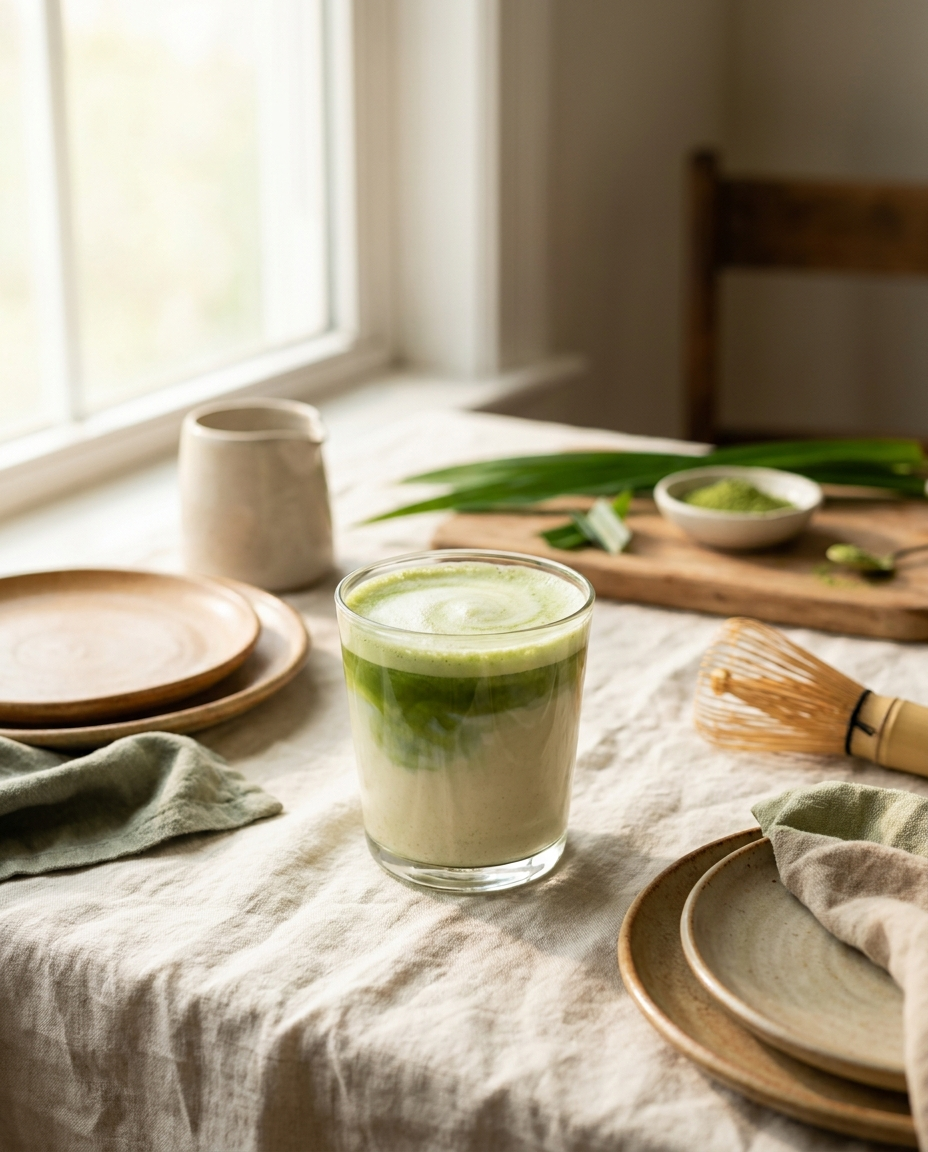
Pandan vs matcha: how do these two green powders differ?
Maison PandanPandan or matcha? These two green powders look alike, but differ in origin, flavour, caffeine and uses. If you are choosing between them, or looking for a caffeine-free alternative to matcha, this guide compares them point by point.
Pandan is often described as an alternative to matcha, yet its origin and uses are distinct. Understanding those differences helps you choose according to your preferences.
Origin and composition
Pandan: an aromatic tropical leaf
Pandan (Pandanus amaryllifolius) is a tropical plant used across Southeast Asia, particularly Thailand, Indonesia and Malaysia. Its long green leaves are traditionally used fresh or infused, and can be dried and ground into powder for convenient cooking.
Pandan powder comes from leaves and naturally contains no caffeine. Its gentle aromatic profile recalls vanilla, almond and coconut, hence the nickname “vanilla of Asia”.
Matcha: finely ground Japanese green tea
Matcha is a green tea powder associated with Japan. It is made from shade-grown tencha leaves, finely ground. Unlike a conventional infusion, the whole powdered leaf is consumed.
Matcha contains caffeine, L-theanine and compounds found in green tea, including catechins.
Taste and aromatic profile
The most immediate difference is flavour. Pandan is appreciated for its gentle, rounded aroma and vanilla-like notes. It works well for those who prefer softer flavours to intense vegetal ones.
Matcha has a grassy, umami profile, sometimes slightly bitter depending on quality and preparation. Higher-quality matcha can be milder while retaining a distinctive green tea character.
Caffeine
Pandan: no caffeine
Pandan naturally contains no caffeine, making it an interesting option when you want to avoid caffeine, including in an evening drink.
Matcha: a caffeinated drink
Matcha contains caffeine alongside L-theanine. It remains a caffeinated drink, so timing and quantity matter if you are sensitive to stimulants.
Nutritional profiles
Pandan contains plant pigments and other leaf compounds studied for antioxidant activity. Traditional uses link it with digestive comfort and relaxation, but these should be distinguished from established clinical effects. Matcha contains green tea catechins and caffeine.
In everyday use, matcha is the more stimulating ingredient, while pandan is often chosen for its aroma and lack of caffeine.
Which is more economical?
Prices vary by quality, grade, supplier and pack size. Compare the current price per gram and the quantity used per serving rather than assuming one powder is always cheaper.
The cost of a latte also depends on the milk and other ingredients. A comparison based on your actual recipe is more useful than a fixed estimate.
Uses in food and drinks
How to use pandan
Pandan works in hot or cold milky drinks, especially pandan latte, and in pastries and desserts. It can bring natural green colour as well as a gentle aroma.
How to use matcha
Matcha is traditionally whisked with hot water or added to a latte. It is also used in baking for its green colour and tea flavour. Careful preparation helps limit lumps and excessive bitterness.
Pandan vs matcha: a comparison
| Criterion | Pandan | Matcha |
|---|---|---|
| Origin | Tropical Southeast Asian leaf | Japanese green tea, ground tencha |
| Caffeine | No | Yes |
| Flavour | Gentle, aromatic | Grassy, umami, sometimes bitter |
| Bitterness | Generally mild at an appropriate dose | Depends on quality and preparation |
| Uses | Drinks and desserts | Drinks and baking |
| Timing | Including caffeine-free evening drinks | Often morning or early afternoon |
Pandan does not replace matcha identically. It offers a complementary, gentler, caffeine-free option, especially for creamy drinks and desserts.
Which green powder should you choose?
If you enjoy green tea traditions and a caffeinated drink, matcha is a natural choice. If you prefer a caffeine-free ingredient with a gentle, vanilla-like profile, pandan works particularly well in lattes, desserts and creative recipes.
You can alternate them according to the time of day and your preferences.
👉 Explore Maison Pandan’s natural pandan powder or the pandan latte kit for your home preparations.
Frequently asked questions
Can pandan really replace matcha?
It is not an identical substitute: flavour, colour and composition differ. It is a gentle, caffeine-free alternative for green drinks with a different taste.
Does pandan contain caffeine?
No, pure pandan naturally contains no caffeine.
Do pandan and matcha taste the same?
No. Matcha is grassy and umami, sometimes bitter. Pandan has gentle notes recalling vanilla, almond and coconut.
Which costs more per serving?
That depends on the product, current price and quantity used. Compare prices and your recipe before deciding.
Can you mix pandan and matcha?
Yes. A matcha pandan latte combines pandan’s gentle aroma with matcha’s intensity. Adjust the proportions to taste.
Which should you use in baking?
Matcha suits macarons, cakes and ice creams with a distinctive tea flavour. Pandan works in chiffon cake, creams, pancakes and milky drinks with softer aromatic notes.
Do they have the same health properties?
Their plant compounds differ. Matcha contains catechins, including EGCG. Pandan contains pigments and phenolic compounds, but its traditional uses should not be treated as clinically proven benefits.
Conclusion
Pandan and matcha are different powders from different traditions. Matcha offers tea flavour and caffeine; pandan offers gentle aroma, versatility and no caffeine. Choose according to taste, recipe and time of day.
A natural, finely ground pandan powder without added flavouring works in hot drinks, cold drinks and everyday recipes.