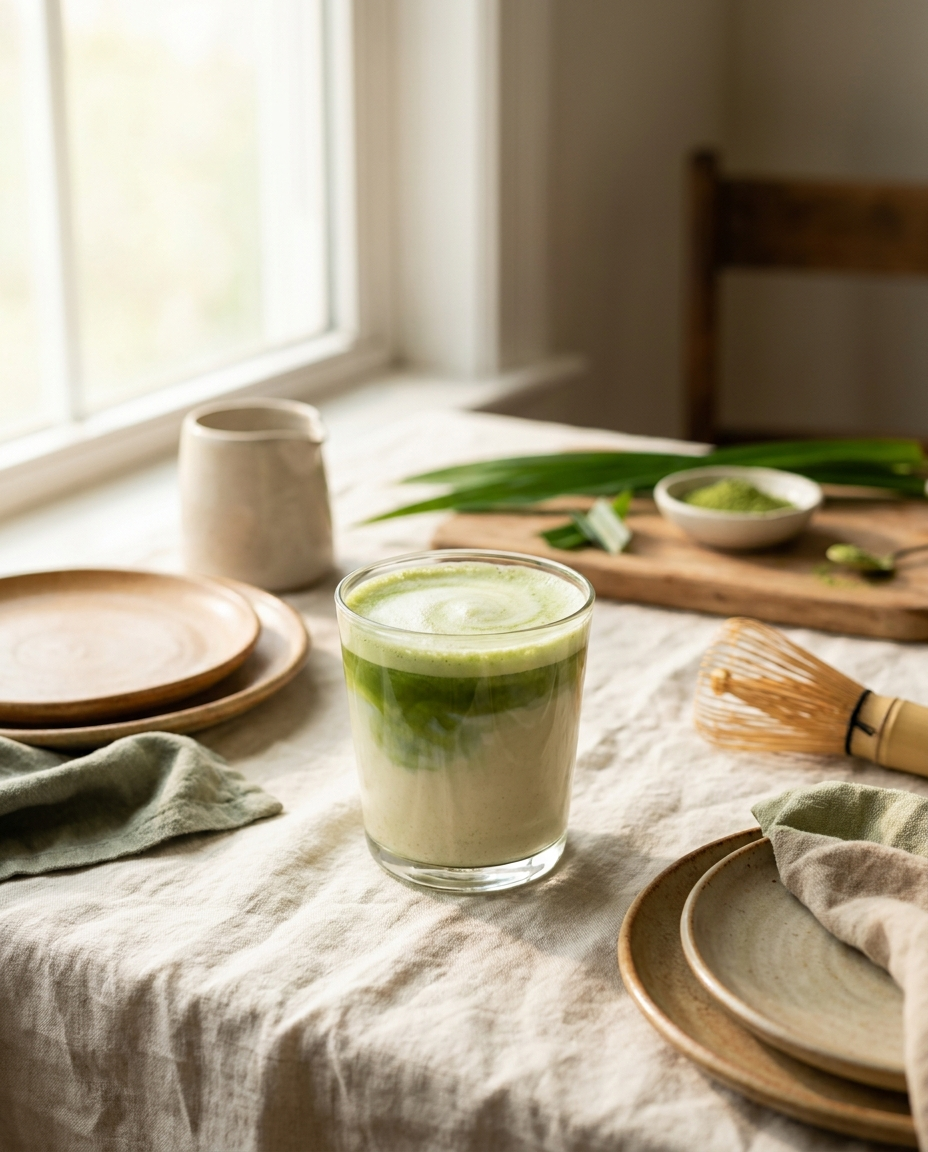
Pandan: Why It's Called the Vanilla of Asia
Maison Pandan
If you've never heard pandan described as "the vanilla of Asia", you're about to understand why this nickname is so perfectly fitting — and why food lovers, chefs and home bakers around the world are falling hard for this remarkable tropical plant.
What Does "The Vanilla of Asia" Actually Mean?
The comparison to vanilla isn't just poetic — it's deeply practical. In Western kitchens, vanilla is the default sweet aromatic. It goes into cakes, custards, ice cream, lattes and biscuits. It's warm, floral, universally loved and almost impossible to dislike.
In Southeast Asia — across Indonesia, Thailand, Malaysia, Vietnam, the Philippines and Singapore — pandan plays exactly the same role. It's the go-to aromatic for desserts, drinks and baked goods. Grandmothers use it. Street food vendors use it. Michelin-starred chefs use it. It's as fundamental to Asian cooking as vanilla is to French pâtisserie.
That's why the nickname stuck: pandan is Asia's vanilla.
What Does Pandan Actually Taste Like?
Pandan (Pandanus amaryllifolius) is a tropical plant with long, ribbon-like bright green leaves. When dried and ground into a fine powder, it releases a complex, captivating aroma that is:
- 🌿 Naturally sweet — but not sugary or cloying
- 🌸 Floral and warm — reminiscent of vanilla but greener
- 🌰 Subtly nutty — with soft almond and coconut undertones
- 🍃 Gently grassy — fresh and clean, never sharp
The closest Western comparison is a blend of vanilla + fresh grass + almond + a hint of coconut. It's approachable, crowd-pleasing, and utterly distinctive. Once you smell it, you'll never forget it.
A Centuries-Old Flavouring Tradition
Vanilla only became widely popular in Europe in the 19th century, largely because it was difficult to grow outside of Mexico. Pandan has been used in Asian kitchens for well over a thousand years.
Across Southeast Asia, pandan leaves have been used to:
- Wrap sticky rice and meats before cooking, infusing them with aroma
- Line steaming baskets to perfume dim sum and dumplings
- Flavour coconut milk–based desserts that have been made for generations
- Scent rice simply by placing a knotted leaf in the pot
- Create natural green food colouring without a single artificial ingredient
In Indonesia, pandan is as culturally significant as vanilla is in Madagascar. It's not a trend — it's a heritage.
Pandan vs Vanilla: How Do They Compare?
| 🌿 Pandan | 🌸 Vanilla | |
|---|---|---|
| Origin | Southeast Asia | Mexico / Madagascar |
| Flavour | Sweet, floral, nutty, grassy | Sweet, warm, creamy, floral |
| Colour | Vibrant natural green | Cream / none |
| Form | Powder, extract, fresh leaves | Pod, extract, powder, paste |
| Price | Very affordable | One of the world's most expensive spices |
| Caffeine | None | None |
| Best for | Desserts, lattes, baking, Asian cuisine | Desserts, baking, Western cuisine |
| Cultural role | The "vanilla" of Southeast Asia | The backbone of Western baking |
Why Pandan Is Winning Over Western Kitchens
In recent years, pandan has gone from niche Asian grocery item to trending ingredient in coffee shops, bakeries and home kitchens across the UK, Europe, the US and Australia.
1. The Pandan Latte Effect
Much like the matcha latte brought Japanese tea culture to Western café menus, the pandan latte is doing the same for Southeast Asian flavours.
2. A Visual Advantage Vanilla Can't Match
Pandan does both — it colours cakes, lattes and desserts in a vibrant natural green without a single drop of artificial food colouring.
3. The "Clean Label" Movement
Consumers increasingly want natural, recognisable ingredients. Pandan powder is exactly that: one ingredient, one plant, nothing added.
4. Vanilla Prices Have Skyrocketed
Real vanilla has become one of the world's most expensive spices. Pandan offers a comparably sweet, aromatic flavour at a fraction of the cost.
5. Southeast Asian Cuisine Is Having Its Moment
From bubble tea to Filipino ube, Southeast and East Asian flavours are now firmly mainstream in the West. Pandan is the next ingredient to cross over.
How to Use Pandan Powder Like Asia's Vanilla
- 🍰 Cakes and sponges — replace vanilla extract with ½–1 tsp pandan powder
- 🥛 Custards and creams — infuse pandan into warm milk as you would vanilla
- ☕ Lattes and hot drinks — whisk into steamed milk for a pandan latte
- 🍪 Biscuits and shortbread — add to the dough for a green, fragrant twist
- 🍨 Ice cream and gelato — blend into the base for a natural green flavour
Frequently Asked Questions
Why is pandan called the vanilla of Asia?
Because it plays the same role in Southeast Asian cooking that vanilla plays in Western baking — it's the default sweet aromatic used for centuries.
Does pandan taste exactly like vanilla?
Not exactly — pandan is sweeter and greener, with nutty and grassy notes that vanilla doesn't have. But the warmth, sweetness and versatility are very similar.
Can I replace vanilla with pandan in recipes?
Yes, in most sweet recipes you can substitute pandan for vanilla. The flavour will be different but equally delicious.
Where can I buy pandan powder in the UK?
Maison Pandan ships premium organic pandan powder directly to the UK with fast delivery. Our powder is 100% pure — no fillers, no artificial additives, just authentic pandan aroma. 👉 Shop now.
The Bottom Line
Pandan isn't a passing food trend. It's a centuries-old culinary staple that the Western world is only just discovering.
If vanilla is the soul of Western baking, pandan is the soul of Asian cooking. And now, it can be the soul of yours too.
👉 Try our 100% natural, organic pandan powder and taste the vanilla of Asia for yourself.