Can You Eat Pandan Every Day?
Maison PandanPandan is increasingly used in Europe, especially in powder form, in drinks and desserts. Its mellow taste and lack of caffeine make it a popular alternative to some more stimulating plant powders. One question keeps coming up, though: can you have pandan every day without any health risk?
To answer it, you need to distinguish between traditional uses, the available scientific data and the general principles of a balanced diet.
Is pandan eaten every day in Asia?
In several Southeast Asian countries, pandan has been part of everyday eating for generations. The leaves are used to flavor rice, desserts, drinks and some coconut-milk-based dishes. This regular consumption generally happens in small amounts, as part of varied meals.
This long-standing cultural use suggests that pandan, when used as a food ingredient rather than as a concentrated substance, is generally well tolerated by most people.
Having pandan every day: is it safe?
To date, there is no evidence that moderate daily consumption of pandan poses a health risk. Pandan contains no caffeine, isn't among the plants known for their toxicity and isn't associated with major side effects in a normal dietary context.
As with any aromatic plant, any discomfort that has been reported is most often linked to excessive consumption or to poor-quality processed products containing additives or artificial colorings.
How much pandan can you have per day?
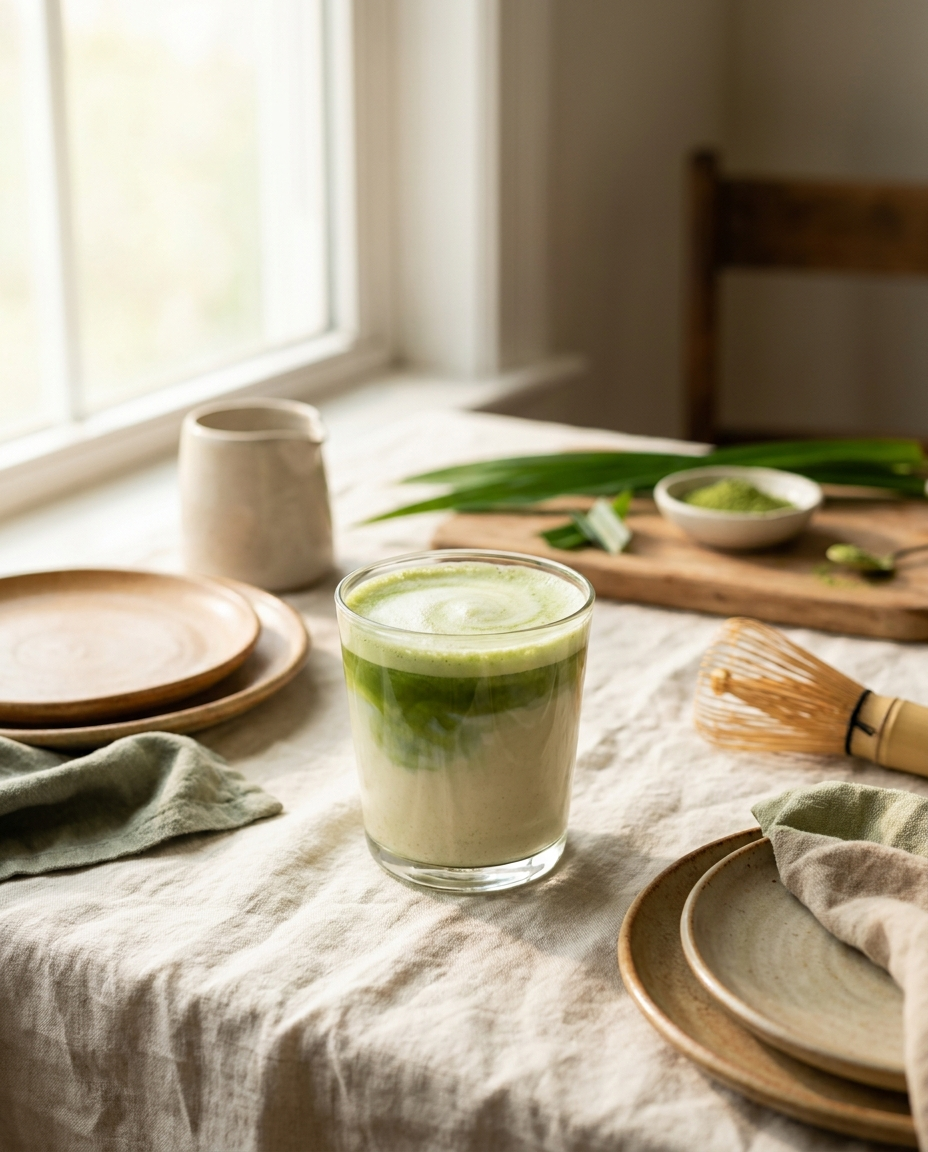
There is no official daily intake for pandan. In practice, the amounts used in cooking or drinks remain small. A light infusion, a pandan latte or occasional use in baking all fall within reasonable proportions.
The most sensible approach is to think of pandan as an aromatic ingredient, not as a product to consume in large amounts for specific health effects.
Daily pandan and a balanced diet
Adding pandan to your daily routine can bring variety and enjoyment, especially for people looking to cut back on caffeine. However, no food should be eaten exclusively or presented as essential.
Pandan fits best into a varied diet, alongside other plant ingredients, fruits, vegetables and complementary sources of nutrients.
Precautions for regular consumption
The main precaution concerns product quality. Some pandan powders on the market contain artificial flavorings or green colorings meant to boost the color or smell. These additives may be less well tolerated than natural pandan.
For daily consumption, it's best to choose a powder made only from pandan leaves, with no additives, and to stick to the amounts used in everyday cooking.
Having pandan every day: the takeaway
Pandan can be eaten every day as part of a normal diet, as long as you keep it moderate and choose quality products. Traditional use and the absence of major warning signs point to good general tolerance.
It is not, however, an ingredient with proven therapeutic effects. Its main appeal lies in its taste, its lack of caffeine and its ability to enrich dishes without excess.
Conclusion
Having pandan every day is possible and generally safe when it's used as an aromatic ingredient in reasonable amounts. The key is still a varied diet and choosing natural products without excessive processing.
For sensitive people or if you have any particular concerns, occasional and gradual consumption remains the best approach, as with any new food.