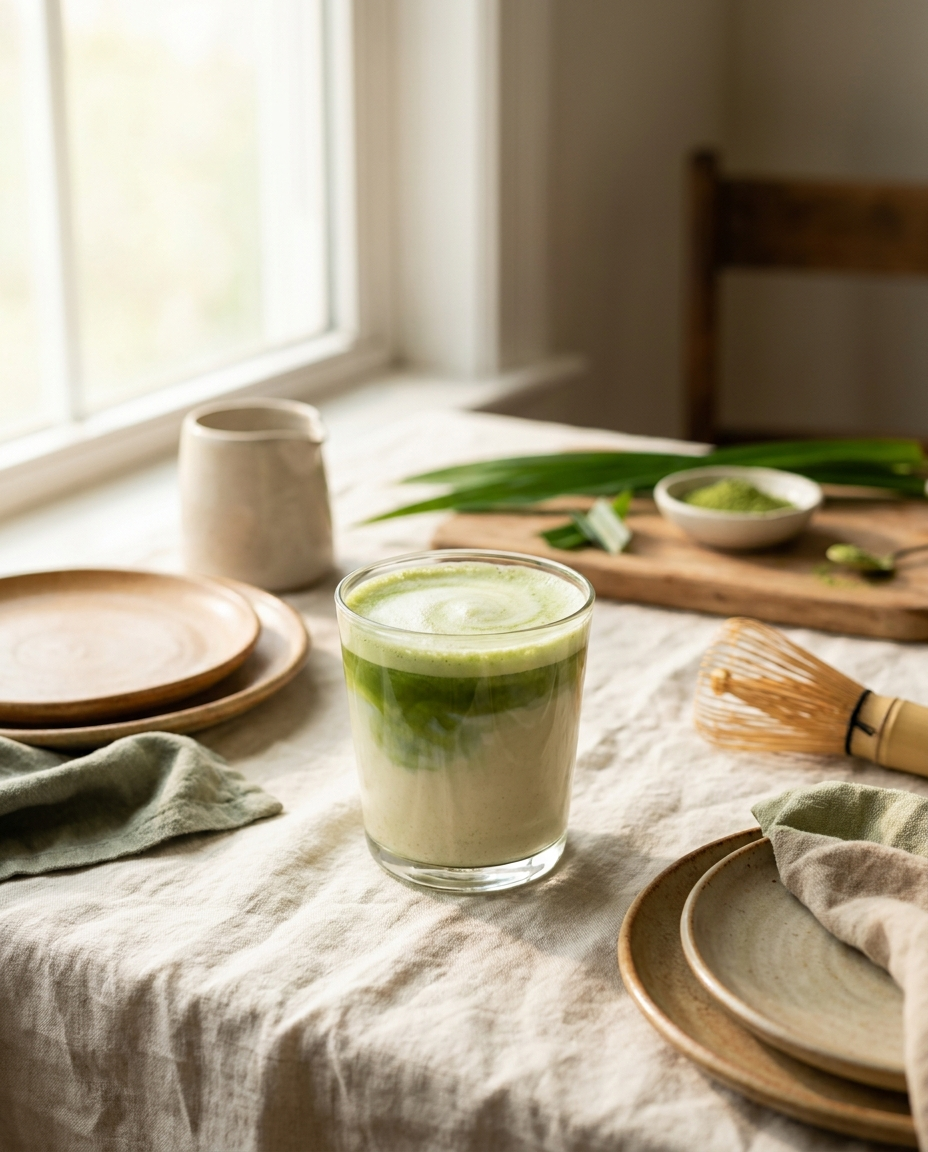
Fresh Pandan Leaves vs Pandan Powder: The Key Differences
Maison PandanPandan can be used in several forms, but the most common are fresh leaves (or frozen) and pandan powder. If you're just discovering this aromatic plant, you may be wondering which form to choose for your recipes. In this article, we compare pandan leaves and pandan powder in terms of flavor, convenience and culinary uses, to help you make the right choice without repeating information already on our site.
Aroma and flavor intensity
Fresh pandan leaves give off a subtle, delicately sweet fragrance, often compared to a blend of vanilla and coconut. Infused in a liquid (water, coconut milk…), they release a mellow but fairly light flavor. Pandan powder, on the other hand, made by grinding dried leaves, has a more concentrated aroma. It's slightly more grassy or earthy than fresh leaves, so its taste is more pronounced while keeping pandan's vanilla-like base. In practice, a small amount of powder is enough to flavor a dish, whereas you'd need several leaves for the same effect.
Keep in mind that because it's so concentrated, the powder can turn bitter if you use too much. Fresh leaves will never make a dish bitter, but their more diffuse fragrance can go unnoticed in very spicy or very rich recipes. In short, for an intense pandan flavor, powder is more effective, while for a subtle, authentic aroma, leaves work wonders (for example in an infusion or fragrant rice).
Availability and storage
In Europe, finding fresh pandan leaves isn't always easy. You can sometimes find them in Asian grocery stores, in the fresh or frozen section, but availability is limited. Fresh leaves also don't keep well: even in the fridge or freezer, their fragrance fades over time. Pandan powder, by contrast, is now easy to get from specialized online shops. Packed in an airtight pouch, it offers a long shelf life (several months) while preserving its aroma. The powder is perfectly happy stored at room temperature, away from light and moisture.
Another practical advantage of the powder: it's available all year round and easy to ship. Fresh leaves, however, depend on air freight or very limited local crops, which explains why they're scarce on the European market. Finally, measuring is more precise with powder. A measuring spoon lets you repeat exactly the same flavor intensity every time, which is harder with leaves whose size and aromatic strength can vary.
Uses in the kitchen
Using fresh leaves: Pandan leaves are usually used for infusing. Rinse them, tie them in a knot (to release more aroma), then drop them into a hot liquid. For example, a few leaves in coconut milk while cooking sticky rice will gently perfume it. After infusing, remove the leaves before serving (a bit like you'd remove a bay leaf). The leaves can also be wrapped around foods (meat, cakes) during cooking to infuse them with their fragrance, a traditional method in Thailand and Malaysia.
Using the powder: Pandan powder is very easy to use, as long as you mix it in properly. Since it's fine but very concentrated, it's best to dissolve it first in a little warm water or milk to get a smooth, lump-free paste. You can then add it to the rest of your recipe (crêpe batter, custard mix, smoothie, etc.). This trick avoids "pockets" of poorly mixed powder and guarantees an even flavor. The powder gives recipes a vivid green color, which makes for fun-looking desserts (e.g., green crêpes, green marble cake). For drinks, you can make a "pandan tea" by steeping the powder in hot water and then straining it, to drink as is or as a latte base, although it will be a little less floral than an infusion of fresh leaves.
In baking, the powder blends well into batters and creams, as long as you don't overdo it. Start, for example, with ½ teaspoon for 4 people, then adjust next time depending on the intensity you want. Remember that pandan powder can surprise you with how strong it is "for something that looks so innocent. It's better to use too little than too much, especially the first time.
Which form of pandan should you choose?
If you have access to fresh leaves and you're after authenticity, go ahead and try them in traditional recipes (infusions, fragrant rice, etc.). The sensory experience of using the whole leaf is part of the joy of cooking exotic dishes. For regular, modern and easy use, however, pandan powder is often the best choice. It concentrates all of pandan's flavor in a convenient, stable and easy-to-measure form. Plus, powder makes creative recipes possible that you simply can't do with leaves (like a pandan frosting, where a leaf couldn't be mixed in).
In short, fresh leaves suit purists and occasional use, while powder is ideal for easily bringing pandan into your everyday cooking. To round out your pandan know-how, remember that each form has its strengths: the leaf for tradition, the powder for innovation. What matters is measuring well and adapting how you use it. And of course, make sure you choose a quality pandan powder to fully enjoy this plant's authentic fragrance.
Need inspiration? With the powder, you can explore plenty of pandan recipes, from lattes to desserts, and take your taste buds on a trip to Asia from your own kitchen. 🌿🥥 Enjoy the journey!